Utah’s expanding economy has increased demand for lawyers in technology, business, real estate, intellectual property, healthcare and financial services. Salt Lake City is the state’s primary legal and commercial center, while Provo has developed a strong technology and startup community. Environmental, public-land and water issues are also important areas of legal practice throughout the region.
Utah has only two operating ABA-approved law schools in 2026. This article covers both genuine in-state institutions, followed by three respected regional alternatives in Arizona, Colorado and Nevada. The final three schools are not located in Utah and are clearly identified as regional options.
1. Brigham Young University J. Reuben Clark Law School
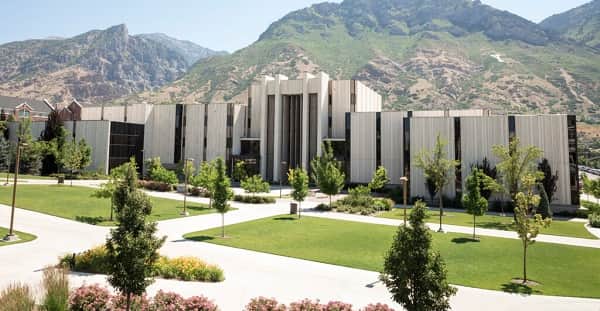
- Location: Provo, Utah
- Accreditation: American Bar Association
Brigham Young University’s J. Reuben Clark Law School offers a respected legal education supported by a large national and international alumni network. The school combines rigorous academics with an institutional emphasis on ethics, leadership, religious freedom and public service.
Students can explore business law, entrepreneurship, technology, constitutional law, international law, taxation and alternative dispute resolution. BYU Law also benefits from Provo’s growing technology sector and its proximity to companies and firms located along Utah’s Silicon Slopes corridor.
Practical education includes externships, skills courses, pro bono projects, advocacy competitions and opportunities to work on technology-based solutions to legal problems. BYU is sponsored by The Church of Jesus Christ of Latter-day Saints and maintains faith-based standards. Applicants should consider whether its religious environment and conduct requirements align with their personal preferences.
2. University of Utah S.J. Quinney College of Law
- Location: Salt Lake City, Utah
- Accreditation: American Bar Association
The S.J. Quinney College of Law is a public law school offering direct access to Utah’s largest legal market. Its Salt Lake City location places students near the Utah Supreme Court, federal courts, state agencies, law firms, technology companies and nonprofit organizations.
The college has notable resources in environmental and natural-resources law, intellectual property, criminal justice, healthcare and public policy. Its environmental programs are particularly relevant to students interested in public lands, Western water management, energy development and protection of the Great Salt Lake.
Clinical opportunities include environmental justice, intellectual property, international law, mental-health advocacy and post-conviction representation. The school also provides field placements, simulation courses and a Pro Bono Initiative through which students assist members of the community under attorney supervision.
3. Arizona State University Sandra Day O’Connor College of Law – Regional Option
- Location: Phoenix, Arizona
- Accreditation: American Bar Association
ASU Law is not located in Utah, but it is a strong Southwestern alternative with access to the large Phoenix legal market. Students can connect with courts, government offices, national law firms, businesses and nonprofit organizations in one of the country’s fastest-growing metropolitan areas.
The school offers considerable depth in Indian law, technology, business, environmental law, intellectual property, sports law and criminal justice. Its Indian Legal Program is especially relevant to students interested in tribal sovereignty and legal matters affecting Native American communities throughout the West.
ASU operates ten clinics covering civil litigation, First Amendment law, immigration, Indian law, patents, entrepreneurship, mediation, post-conviction work, prosecution and public defense. The school also offers extensive externship and professional networking opportunities.
4. University of Colorado Law School – Regional Option
- Location: Boulder, Colorado
- Accreditation: American Bar Association
The University of Colorado Law School is another respected regional choice for students interested in legal careers in the Mountain West. Its proximity to Denver and Boulder’s technology community creates opportunities with law firms, government agencies, startups and established companies.
Colorado Law is particularly recognized for natural-resources, energy, environmental and water law. Additional strengths include technology, telecommunications, entrepreneurship, constitutional law and public service. These subjects are highly relevant to legal issues affecting Utah and neighboring Western states.
Students can obtain practical experience through clinics, externships and public-service projects. Clinical opportunities address subjects such as natural resources, American Indian law, criminal defense, entrepreneurship, immigration and juvenile justice. Colorado’s public-school tuition may provide better value for residents, while Utah applicants should examine nonresident tuition and scholarship options.
5. University of Nevada, Las Vegas William S. Boyd School of Law – Regional Option
- Location: Las Vegas, Nevada
- Accreditation: American Bar Association
UNLV’s William S. Boyd School of Law is a practical regional alternative, particularly for students from southern Utah. Its Las Vegas location provides access to courts, government agencies, hospitality companies, gaming businesses and a rapidly growing commercial market.
Boyd Law offers concentrations in business and commercial law, dispute resolution, health law, intellectual property, workplace law, and Indian Nations gaming and governance. Its gaming-law curriculum is distinctive and benefits from direct connections with regulators and major industry organizations.
The Thomas & Mack Legal Clinic gives students supervised experience representing clients and serving local communities. Additional practical preparation is available through externships, simulation courses, mediation training and advocacy programs. Boyd also provides full-time and part-time J.D. options.
Factors Considered for This Selection
The institutions were evaluated using the following considerations:
- ABA accreditation and availability of a recognized J.D. program
- Academic quality and professional reputation
- Access to Utah and Mountain West legal markets
- Clinics, externships and practical training
- Strength in technology, business, water and environmental law
- Connections with courts, law firms, companies and government agencies
- Alumni networks and geographic career reach
- Tuition, scholarships and total cost of attendance
- Bar preparation and publicly reported graduate outcomes
Conclusion
BYU’s J. Reuben Clark Law School offers a strong reputation, an extensive alumni network and access to Provo’s growing business and technology community. The University of Utah S.J. Quinney College of Law provides direct connections to Salt Lake City and valuable expertise in environmental, natural-resources and public-law matters.
Because Utah has only two ABA-approved law schools, ASU, the University of Colorado and UNLV have been included as regional alternatives. ASU provides access to Phoenix and extensive specialized programs, Colorado Law is particularly strong in environmental and technology-related subjects, and UNLV offers practical access for southern Utah residents.
Applicants should compare scholarship conditions, living expenses, bar-passage performance and employment outcomes. Those planning to practise in Utah should also determine whether an out-of-state school provides sufficient opportunities to build relationships with Utah firms, courts and professional organizations.