Pennsylvania is home to several respected law schools and three important legal markets: Philadelphia, Pittsburgh, and Harrisburg. Students can pursue careers in corporate law, litigation, healthcare, government, technology, public interest law, and judicial service while building connections with employers throughout the Northeast.
The following selection focuses on ABA-approved institutions with strong academics, experiential opportunities, employer connections, and professional reputations. The order is intended as an overall guide rather than a ranking for every student, since cost, career goals, and preferred location can significantly affect the best choice.
1. University of Pennsylvania Carey Law School
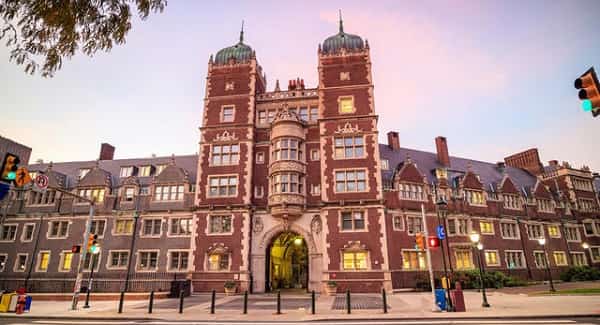
- Location: Philadelphia, Pennsylvania
- Accreditation: American Bar Association
The University of Pennsylvania Carey Law School is Pennsylvania’s most nationally prominent law school. As part of the University of Pennsylvania, it gives law students access to courses, faculty, and joint-degree opportunities across highly regarded schools of business, medicine, engineering, public policy, and social sciences.
Penn Carey Law is particularly strong in corporate law, business transactions, intellectual property, technology, constitutional law, international law, and public interest practice. Its location in Philadelphia also places students near major law firms, courts, corporations, government offices, and nonprofit organizations.
Experiential education is available through the Gittis Legal Clinics, externships, pro bono projects, and more than 60 qualifying experiential courses. The school is an excellent option for applicants seeking national career mobility, although its highly selective admissions process and cost require careful consideration.
2. Villanova University Charles Widger School of Law
- Location: Villanova, Pennsylvania
- Accreditation: American Bar Association
Villanova University Charles Widger School of Law combines a strong professional reputation with convenient access to Philadelphia’s legal market. Its Main Line campus is approximately 12 miles from central Philadelphia, allowing students to pursue internships and externships while studying in a traditional university environment.
The curriculum is especially attractive for students interested in business law, taxation, intellectual property, litigation, healthcare law, and sports law. Villanova’s connection with its business school supports joint-degree and interdisciplinary opportunities for students planning careers in corporate or transactional practice.
Clinics, externships, advocacy programs, and legal-writing courses help students build practical skills. Villanova also has an active alumni network in Pennsylvania and throughout the Northeast, particularly within law firms, corporations, financial organizations, and professional sports.
3. Temple University James E. Beasley School of Law
- Location: Philadelphia, Pennsylvania
- Accreditation: American Bar Association
Temple University Beasley School of Law is widely respected for producing practice-ready attorneys. Its Philadelphia location provides direct access to state and federal courts, government agencies, public defenders, prosecutors, major law firms, and legal-aid organizations.
Trial advocacy is one of Temple Law’s most distinctive strengths. Students receive intensive performance-based training in courtroom presentation, evidence, witness examination, negotiation, and litigation strategy. Temple also offers programs in international law, healthcare law, business law, taxation, public interest law, and legal writing.
Experiential opportunities include in-house clinics, external clinics, and approximately 300 potential externship placements for eligible students. Temple’s part-time program can also make legal education more accessible to working professionals and students who require additional flexibility.
4. Penn State Dickinson Law
- Location: Carlisle and University Park, Pennsylvania
- Accreditation: American Bar Association
Penn State Dickinson Law now operates as one unified law school with locations in Carlisle and University Park. The unification brought together the former Dickinson Law and Penn State Law programs, with the first unified entering class beginning in fall 2025.
Students benefit from the resources of a major public research university and can pursue interdisciplinary study in areas such as business, healthcare, technology, public policy, agriculture, and international affairs. Carlisle offers convenient access to Harrisburg’s courts and government agencies, while University Park provides broader connections with Penn State’s academic departments and research community.
Clinical and experiential opportunities include legal clinics, externships, simulations, and advocacy programs. Depending on location and availability, students may gain experience in civil rights, immigration, entrepreneurship, veterans’ matters, criminal defense, and arts, sports, and entertainment law.
5. University of Pittsburgh School of Law
- Location: Pittsburgh, Pennsylvania
- Accreditation: American Bar Association
The University of Pittsburgh School of Law is a strong public-law-school option for students interested in western Pennsylvania and surrounding markets. Pittsburgh supports a diverse legal economy involving healthcare, financial services, technology, energy, manufacturing, government, and nonprofit organizations.
Pitt Law students can pursue interdisciplinary opportunities through other University of Pittsburgh departments and programs at neighboring Carnegie Mellon University. This environment can be valuable for students interested in health law, intellectual property, technology, cybersecurity, business, and innovation.
Practical training is available through clinics, practicums, externships, moot court, mock trial, and a Semester in Washington, D.C. program. The school’s legal clinics provide supervised experience with real clients in areas such as immigration, health law, family law, elder law, and community development.
Factors Considered for This Selection
The schools were evaluated using the following considerations:
- American Bar Association accreditation
- Academic and professional reputation
- Graduate employment and bar-examination outcomes
- Access to Philadelphia, Pittsburgh, Harrisburg, and national markets
- Clinics, externships, advocacy programs, and practical training
- Strength in corporate, litigation, healthcare, technology, and public interest law
- Alumni networks and employer relationships
- Tuition, scholarships, and overall educational value
- Availability of interdisciplinary and joint-degree programs
Conclusion
Penn Carey Law offers the greatest national reach, while Villanova and Temple provide excellent access to Philadelphia’s legal market. Penn State Dickinson and Pitt are strong choices for students interested in public-school value, government, interdisciplinary study, and careers elsewhere in Pennsylvania. Applicants should compare scholarships, debt, employment outcomes, and preferred practice location before deciding.