You must already know how big Menards is as a brand name in the retail chain segment of the Midwest. But there was a big case alleging that their marketing practices were kinda shady and that’s why we’re talking about this Menards Settlement here. Yup! This case is now settled, and the settlement amount is a huge $4.25 million, so it is about time that we talk about the breakup of the amount and just a little bit about the case so that you don’t feel left behind.
How Does the Menards 11% Rebate Program Work?
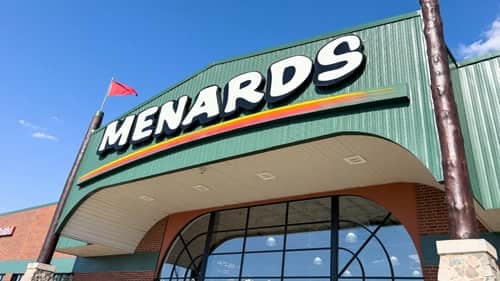
Before you get to the judging part, it is better to see how the rebate program actually worked and all that, right? So, here’s how. First things first, Menards is always running promotions such as “11% OFF EVERYTHING.” A quick look at it is like an instant price reduction at the checkout. But, as all of us right now know that the reality is quite different.
In fact, customers must buy the merchandise at the full price, fill in and dispatch a rebate form after purchase, and then wait for a merchandise credit check to come through. But the thing is, the credit isn’t some form of cash or anything like that, nah, instead, the credit is only usable for subsequent purchases at Menards stores. Hence, the savings are not immediate.
Besides that, the rebate processing is done by Rebates International, an entity owned by Menards itself. That is pretty much the sketchy part standing out to a lot of people out there.
The Main Allegations in the Settlement
From the very start, the states that participated declared that the advertising of Menards was misleading. Big signs and advertisements that said “11% OFF” created an impression among the clients that they would get an instant discount. But as you and me already know, the offer was in fact a mail-in rebate for store credit only. Quite often, important information was left out in the small print or was not adequately visible.
Moreover, Menards was charged with price gouging during the COVID-19 pandemic in 2020. A few states witnessed price increases in basic items like bottled water, rubbing alcohol, dish soap, garbage bags, and gloves. And sure enough, since these products were highly sought after during the pandemic, the price increases generated serious concerns.
How the States Got Involved
A group of attorneys general from 10 different states like Minnesota, Wisconsin, Illinois, Iowa, Arizona, Kansas, Michigan, Nebraska, Ohio, and South Dakota, collaborated on this case. To be more specific, the suit was brought in Minnesota’s Ramsey County District Court, and the settlement got its nod on December 17, 2025.
Surely, the settlement is already done, and the total amount of $4.25 million is here, which will be divided among the states. Just to give you an idea here, see, Minnesota gets roughly $632,000, Wisconsin gets a little over $750,000, and Illinois receives close to $946,000, while the rest of the amount is allocated to the other states accordingly.
What Changes Does Menards Have to Make?
Certainly, from this point onwards, Menards can’t just go about all this in their own way, they have to make a bunch of changes so that this whole mess doesn’t occur again.
Talking about the first and big change, see, rebates can no longer be “sold” as if they were instant discounts in Menards advertisements. Other than that, it has to indicate that rebates are a kind of store credit for the next purchases, and the consumer should have no difficulty in understanding all the conditions and restrictions. Besides, the company has to make a disclosure that Rebates International is a division of Menards. Plain and simple! At least that type of transparency should be there.